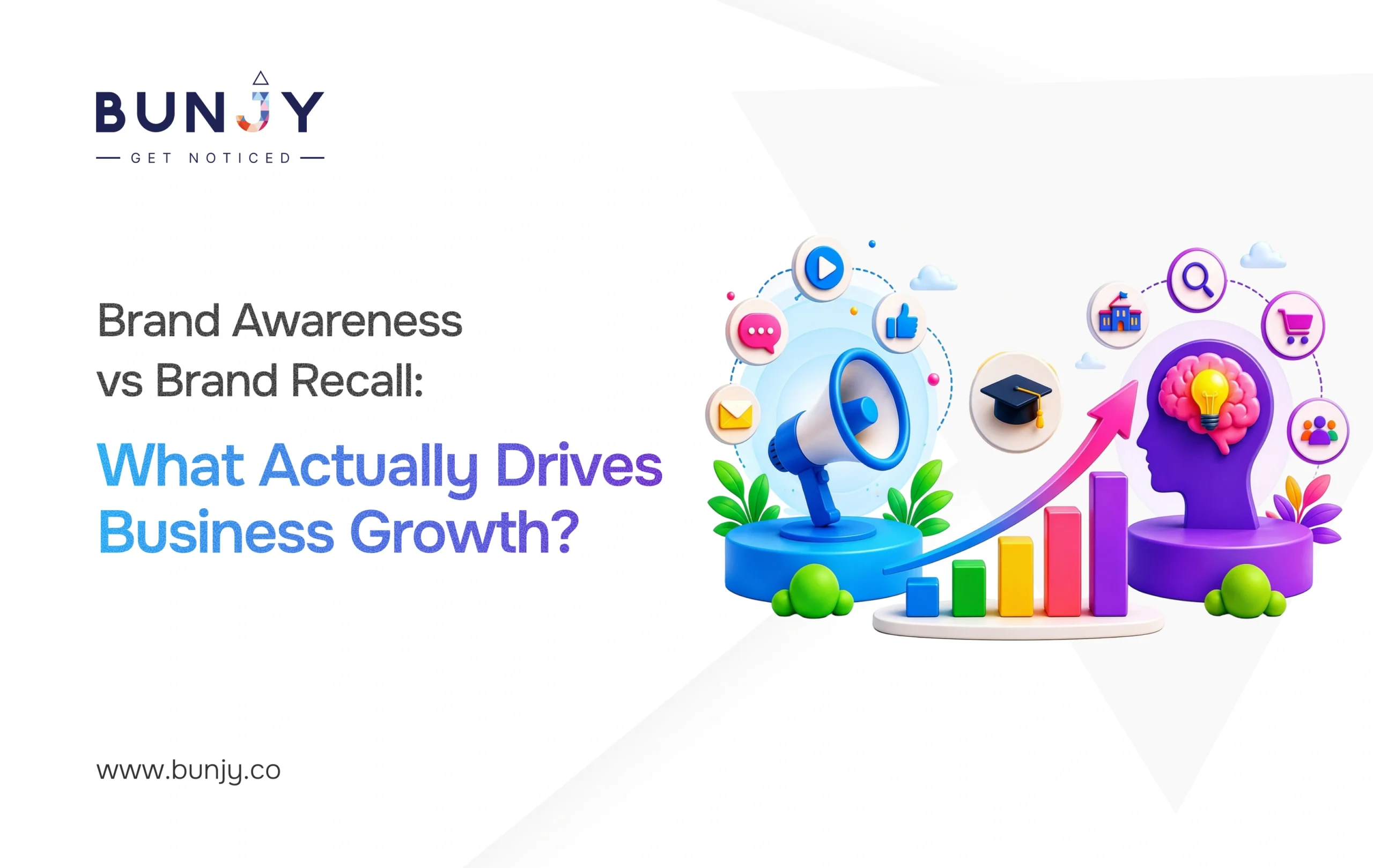
Most businesses treat brand awareness and brand recall as the same thing, assuming that visibility automatically translates into memory. But being seen and being remembered are two very different outcomes.
A consumer may recognise your brand in a crowded feed today and still forget it completely when it’s time to make a purchase. Brand awareness is about familiarity, while brand recall is about mental availability whether your brand is the first one that comes to mind in a buying moment.
In an era where consumers are exposed to endless content every day, that difference can directly influence customer decisions, conversions, and long-term revenue growth. Understanding this distinction changes how businesses approach branding entirely. One builds exposure. The other builds preference. And only one stays with consumers when purchase decisions are actually made.
Understanding Brand Awareness vs Brand Recall
Brand awareness is about presence. It’s whether your target audience knows your brand exists. Did they see your ad? Do they recognise your logo? Have they heard your name?
Brand recall, on the other hand, is about retrieval. Can a customer remember your brand when they need a solution? When someone thinks “coffee,” do they think of you? That’s recall.
A consumer might be aware of 50 brands but recall only 5 when making a purchase decision.
What this means for marketers: Building awareness is the foundation, but recall is where conversions happen. You need both, but they require different strategies and different metrics to measure success.
Why Brand Awareness Alone Isn’t Enough
Every brand wants high awareness. It feels good to see your name everywhere. But awareness without recall is like having a billboard that nobody remembers.
Consider brand awareness examples: A startup could run a viral campaign and reach millions, but if those millions don’t remember the brand when they’re ready to buy, the awareness translates to zero revenue.
Related Topics:
7 Benefits of Having an Effective Content Marketing Strategy
Top 5 Digital Marketing Books for Beginners
Digital Marketing for Entrepreneurs
Studies consistently show that consumers are exposed to thousands of marketing messages daily. Most fade within minutes. Awareness gets you in the door, but it doesn’t guarantee you’ll be top-of-mind when it matters most.
What this means for marketers: Stop optimising purely for reach and impressions. A smaller, more targeted audience that remembers your brand is worth far more than a massive audience that forgets you by tomorrow.
Brand Recall Examples: Where It Actually Drives Sales
The brands that dominate their categories excel at recall. When someone needs a tech product, they think Apple. When they think fast food, they think McDonald’s. When they think luxury watches, they think Rolex.
These brands didn’t just build awareness, they built pathways in the consumer’s mind. They created consistent messaging, repeated brand touchpoints and emotional connections that stick. Other brand recall examples include Coca-Cola’s iconic red branding, Nike’s “Just Do It” slogan, or Spotify’s recognisable playlists and algorithm-driven experience. These aren’t just visible; they’re unforgettable.
Recall-driven brands have higher customer lifetime value, stronger word-of-mouth, and more resilience during competition because they’re already wired into customer thinking.
What this means for marketers: Consistency, repetition and emotional resonance build recall. Your brand strategy should prioritise becoming the first name customers think of, not just the first name they see.
The Brand Awareness Strategy That Actually Works
Effective brand awareness strategy doesn’t mean “be everywhere.” It means being strategic about where your audience is and what message will resonate.
Awareness comes from:
- Strategic placements where your audience actively spends time
- Consistent messaging that communicates your unique value
- Multi-channel presence that reinforces your positioning
- Quality content that adds value, not just visibility
- Partnerships and collaborations that extend your reach authentically
Brands that succeed with awareness strategy are intentional. They pick their channels, craft their message and measure what’s actually moving the needle, not just counting impressions.
What this means for marketers: Your awareness budget should be concentrated on channels that align with your brand positioning and customer behaviour, not scattered across every platform. Depth beats breadth.
The Path From Awareness to Recall: Building the Bridge
Awareness gets attention. Recall drives decisions. The bridge between them is consistency and relevance.
A customer needs to encounter your brand multiple times in meaningful ways. The first interaction builds awareness. Subsequent interactions, when they’re relevant and valuable, build recall. This is why top-of-funnel awareness campaigns often feel disconnected from conversion messaging. They’re supposed to. But eventually, that awareness needs to convert into recall: the customer remembers you exist and considers you when deciding.
What this means for marketers: Create a customer journey that moves awareness through to recall. First touchpoints can be broad and educational. Later touchpoints should reinforce your unique positioning and build memory associations.
Measuring What Actually Matters
Most brands measure brand awareness through metrics like reach, impressions and social media followers. These are important, but they’re not enough.
Brand recall is measured differently: through aided recall (showing someone your brand and seeing if they remember), unaided recall (asking what brands they remember without prompts) and top-of-mind recall (the first brand they think of in a category).
A brand with 10 million impressions but low unaided recall is underperforming. A brand with 1 million highly targeted impressions and high top-of-mind recall is outperforming.
What this means for marketers: Track both metrics, but weight your efforts accordingly. Measure awareness, yes. But obsess over recall metrics like unaided awareness, brand association, and purchase consideration. Those directly correlate with revenue.
Why Growth-Stage Companies Get This Wrong
Early-stage startups often focus entirely on awareness because growth feels like a numbers game. They want to be known. But breakout companies shift focus to recall once they’ve established baseline awareness.
The brands that plateau are the ones that stay stuck in awareness mode, constantly chasing new audiences. The brands that accelerate are the ones that deepen their position in customer minds.
This requires patience. Recall takes longer to build than awareness. But once established, it’s more defensible and profitable.
What this means for marketers: As your brand matures, gradually shift your budget from pure awareness plays toward recall-building activities. Deepen relationships with existing audiences before constantly chasing new ones.
Final Thoughts
Brand awareness without recall is marketing noise. Brand recall without any awareness doesn’t exist. The most successful brands build awareness strategically and convert it into recall through consistency, relevance and emotional connection.
This generation of customers is more discerning than ever. They’re exposed to thousands of brands and filter out most of them. The brands that win are the ones they remember, not just the ones they’ve heard of.
As competitive pressure increases across every industry, the question isn’t “Are customers aware of us?” It’s “Do they think of us first?”
Focus on building recall, and growth will follow.
want to know more visit: Consumer Brand Marketing Services
FAQ
What is the difference between brand awareness and brand recall?
Brand awareness refers to how familiar people are with your business, while brand recall measures whether customers can remember your brand when they need a product or service. A strong brand awareness strategy helps visibility, but brand recall drives faster buying decisions and long-term growth.
Why is brand recall important for business growth?
Brand recall increases the chances of customers choosing your business over competitors without extensive research. Strong brand recall examples include brands people instantly think of for categories like food delivery, smartphones, or online shopping.
How can businesses improve their brand awareness strategy?
Businesses can improve brand awareness through consistent social media marketing, SEO, paid ads, influencer collaborations, content marketing, and memorable visual branding. Consistency across platforms is key to staying visible.
What are some effective brand recall examples?
Some common brand recall examples include instantly associating a swoosh logo with sportswear or a specific red beverage can with soft drinks. These brands use repetition, storytelling, and emotional connection to stay memorable.
Which matters more: brand awareness or brand recall?
Both are important, but brand recall often has a stronger impact on conversions and customer loyalty. Awareness helps people discover your brand, while recall helps them remember and choose it when making purchase decisions.
How does digital marketing improve brand recall?
Digital marketing strengthens brand recall through repeated exposure, personalized campaigns, consistent messaging, engaging content, and retargeting ads that keep your brand top-of-mind for potential customers.



Categories: Blog