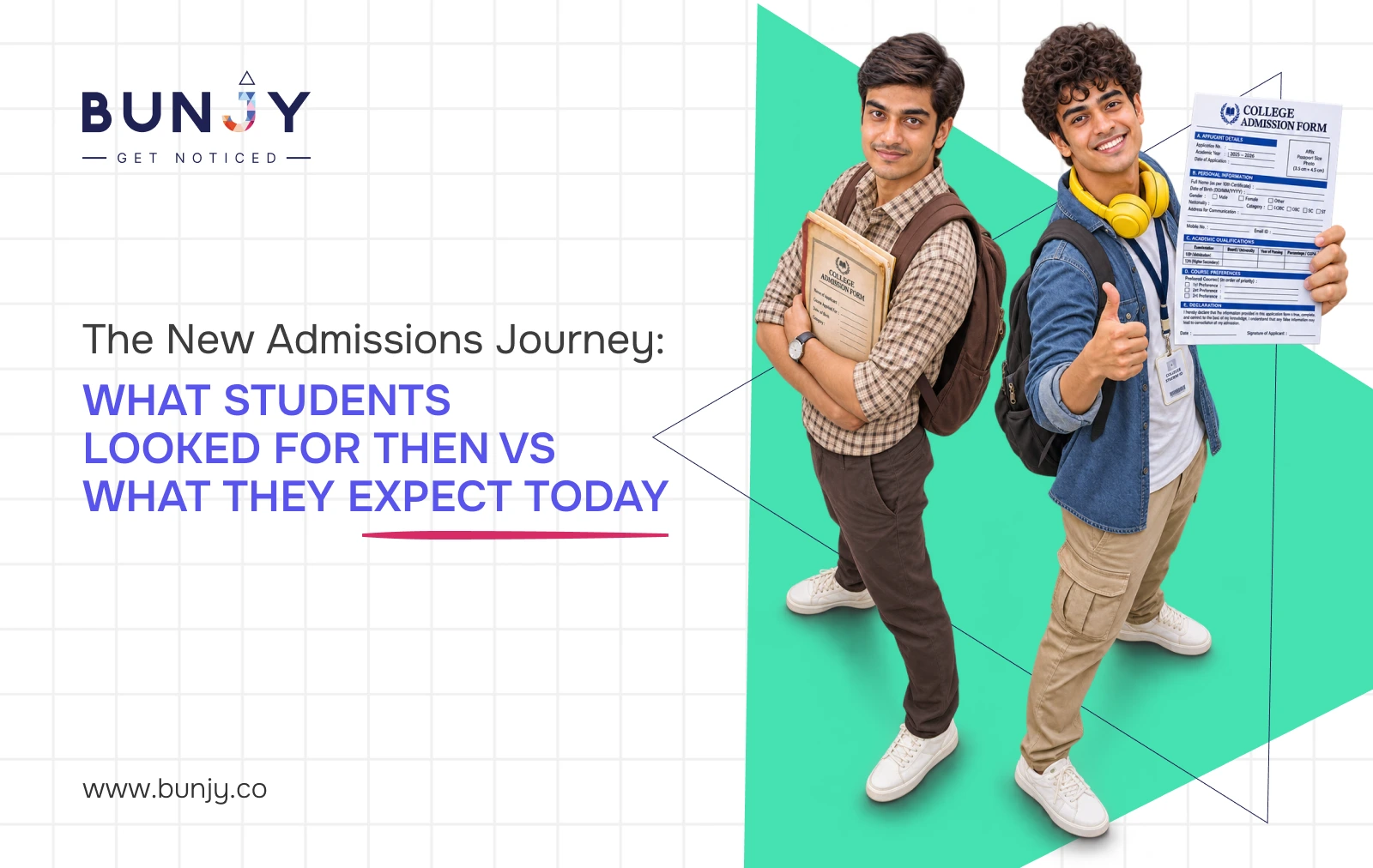
Choosing a college was once a relatively straightforward process. Students and parents relied on prospectuses, newspaper advertisements, education fairs, recommendations from friends and family, and visits to college campuses. These sources helped them understand what an institution offered and decide whether it was the right fit.
Today, the journey looks very different. Students begin their research online, compare multiple institutions, watch campus videos, read reviews and even use AI tools to explore their options. The Student Admission Journey has become more digital, more research-driven and increasingly influenced by what students discover across different platforms.
For educational institutions, this means that attracting prospective students requires more than an admissions advertisement or an updated prospectus. They need to be visible, informative and engaging wherever students look for answers.
From Campus Visits to Online College Search
Earlier, campus visits played a major role in college selection. Students would visit institutions, speak to faculty, explore facilities and collect prospectuses to understand courses, fees and admission requirements. Word of mouth also carried considerable influence, with families often relying on recommendations from relatives, teachers and alumni.
Now, much of this research begins well before a student steps onto campus. A Google search can introduce them to several colleges in minutes. They may explore course pages, compare placement records, browse social media profiles and watch campus walkthroughs before deciding which institutions are worth visiting.
Bunjy’s independent admissions research found that 40% of respondents used Google Search for college discovery, while 25% turned to social media. Word of mouth accounted for 15%, followed by official college websites at 10%.
This shift in Online College Search means institutions must make essential information easy to find. Course details, eligibility criteria, fee structures, placement outcomes, campus facilities and admission timelines should be clearly presented across their digital platforms.
Social Media Is Now Part of the College Experience
Social media has moved beyond being a channel for announcements and promotional campaigns. It gives prospective students a way to understand what campus life might actually look like.
Related Topics:
How to choose a branding agency in 2026
How to Take Admissions Marketing Beyond Enquiries and All the Way to Enrolment
Complete Guide to Performance Marketing for B2B Technology Companies
AI in B2B Marketing: Does Growth Come from Presence or Precision?
Students want to see more than a list of courses and facilities. They look for student experiences, cultural events, classroom activities, campus infrastructure, clubs, achievements and placement updates. These glimpses help them picture themselves as part of the institution.
For colleges, this makes an active and informative social media presence essential. Regular content, student-led stories, testimonials, event coverage, interactive posts and question-and-answer sessions can help institutions build a connection with prospective applicants.
As part of Digital Marketing for Educational Institutions, social media should serve both discovery and engagement. It should give students useful information, encourage participation and keep the institution visible throughout the decision-making process.
Online Reviews and AI Are Changing How Students Evaluate Colleges
Today’s students do not rely only on what an institution says about itself. They also look at what others have to say. Google reviews, student testimonials, alumni experiences and online discussions can influence how prospective applicants perceive a college.
AI is adding another layer to this process. Students are increasingly using AI tools to compare courses, shortlist institutions, understand admission requirements and get answers to specific questions.
Bunjy’s admissions playbook highlights that 46% of college-bound students used AI during their college search in late 2025, compared with 26% earlier that year. It also reports that 79% of prospects read Google’s AI Overviews before clicking a search result.
These College Admission Trends point to a broader change: institutions need to consider how they appear not only in traditional search results but also in AI-generated answers.
That means maintaining accurate, well-organised website content, publishing clear course information, answering common admission questions and ensuring that key details remain consistent across digital platforms. A strong online reputation also depends on responding thoughtfully to reviews and giving current students and alumni opportunities to share genuine experiences.
What This Means for Student Recruitment Strategies
The admissions journey is no longer a series of disconnected interactions. A student might discover a college through Instagram, visit its website, read Google reviews, compare placement information, attend a virtual counselling session and finally submit an enquiry through a landing page.
Institutions need to connect these touchpoints rather than treating each channel as a separate activity.
Effective Student Recruitment Strategies should focus on:
- Building search visibility: Optimise websites and course pages so students can find relevant information through Google and other discovery platforms.
- Creating useful content: Address common questions about courses, placements, fees, eligibility, campus facilities and student life.
- Maintaining an active social presence: Share regular updates that help prospective students understand the institution and its community.
- Strengthening online reputation: Encourage authentic student and alumni feedback, monitor reviews and respond to concerns.
- Connecting enquiries to counselling: Use CRM systems and timely follow-ups to ensure that interested students receive the information and guidance they need.
- Tracking the complete journey: Measure not just reach and enquiries, but also counselling participation, applications and confirmed admissions.
The objective is to make every interaction useful, whether a student is discovering the institution for the first time or preparing to make a final decision.
Preparing for the New Admissions Journey with Bunjy
The way students discover and evaluate colleges has changed, and institutions need an admissions marketing approach that reflects this shift. Visibility on search engines, relevant social media content, a well-structured website, a credible online reputation and connected enquiry management all play a role in attracting the right applicants.
At Bunjy, we work with educational institutions to bring these elements together through strategy, creative, technology and performance marketing. From website development and SEO to social media management, paid campaigns, lead generation and admissions funnel optimisation, we help colleges build a more connected digital presence.
With experience supporting 50+ institutions and delivering 100+ admissions campaigns, Bunjy helps institutions reach prospective students, communicate their value and strengthen their admissions journeys.
Planning your next admissions campaign?
Get in touch with Bunjy for a free digital presence and admissions marketing audit.
Research figures referenced in this article are from Bunjy’s independent survey among participating respondents.
Related Case Studies


Categories: Blog