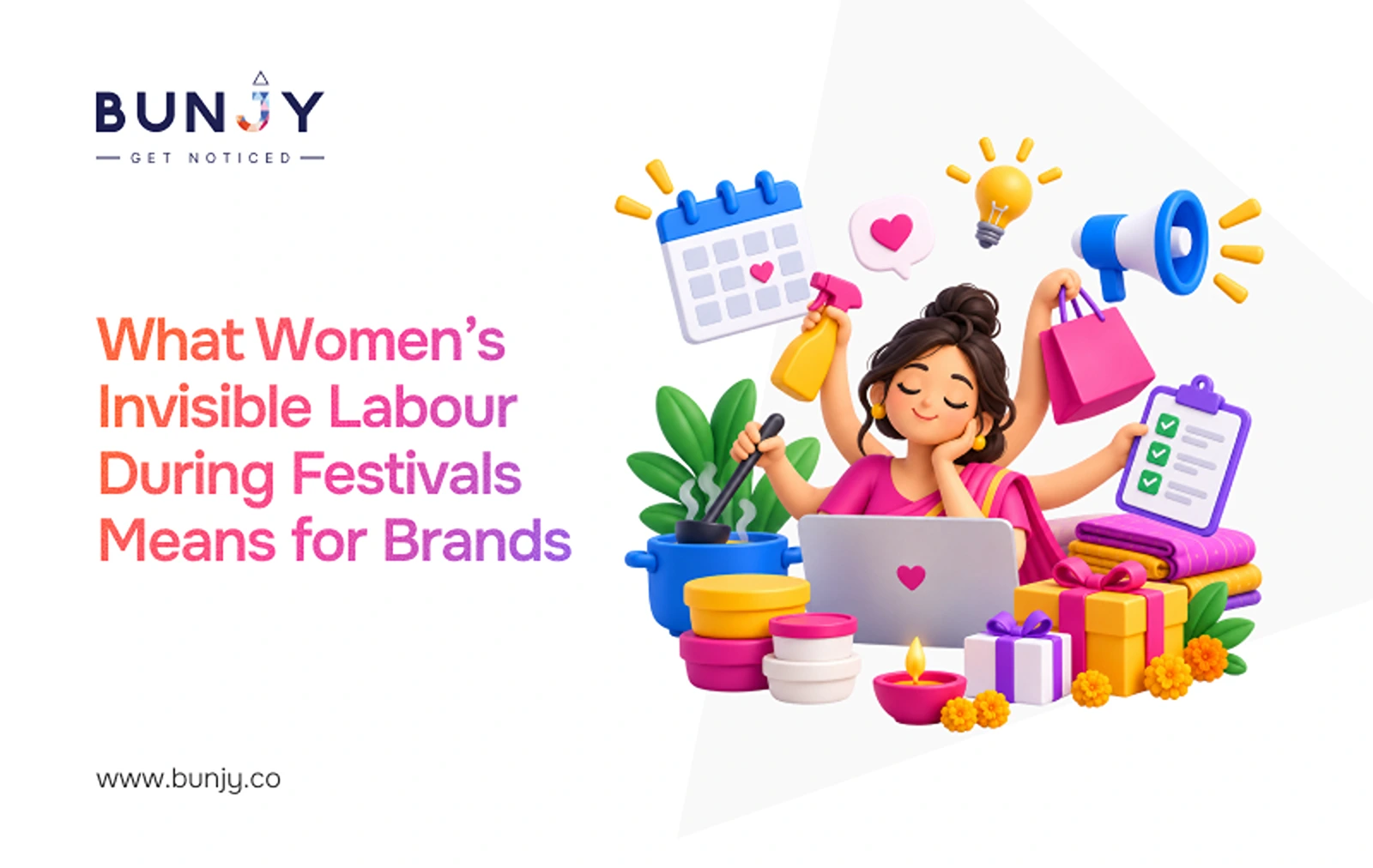
Every festive season, Indian advertising follows a familiar script. A smiling woman wakes up before dawn. She decorates the home, prepares elaborate meals, organises gifts, manages family expectations, performs rituals flawlessly, and somehow remains radiant throughout the celebration.
This type of imagery also raises an important question:
Why is the responsibility for preserving traditions, rituals and festive culture so often placed on women?
As conversations around gender roles evolve, festive advertising is facing increasing scrutiny. Audiences are beginning to recognise the invisible labour that powers celebrations and questioning whether advertising reflects modern realities or simply reinforces outdated expectations. For brands, this isn’t just a representation issue.
Households function through a combination of visible and invisible work. Visible work in the public sphere is usually done by men and is recognised and acknowledged.
Invisible work is often taken for granted. During festivals, women frequently perform both. Across households, women are often responsible for planning celebrations, organising rituals, purchasing gifts, preparing festive meals, decorating homes and managing family gatherings.
While festivals are celebrated collectively, much of the preparation remains gendered. Research examining festive behaviour in Indian households found that women frequently carry the emotional and logistical burden of ensuring celebrations run smoothly even when managing office work, caregiving and household responsibilities simultaneously.
To understand why this happens, we need to look beyond advertising and into sociology. Across cultures, rituals serve an important social purpose. They preserve identity, strengthen community bonds and transmit values across generations.
Historically, women have often been positioned as the primary transmitters of these traditions. From preparing festive foods to teaching customs to children, women have been expected to safeguard cultural continuity.
A successful celebration is often viewed as evidence of a woman’s dedication, competence and commitment to family values.
This creates what sociologists describe as “emotional labour”, the work involved in managing experiences, emotions and social expectations for others.
Related Topics:
What is Metaverse? What Could it Mean to You?
The Contradiction in Festive Advertising
Interestingly, advertising has evolved significantly in many areas of gender representation. Brands increasingly portray women as entrepreneurs, leaders, athletes and decision-makers. Yet during festive campaigns, many advertisements continue to revert to traditional stereotypes where women become the organiser, the host, and the keeper of traditions. Men, meanwhile, are often shown as participants rather than planners.
The result is a contradiction.Modern women are expected to succeed professionally while continuing to shoulder the majority of festive and emotional responsibilities at home. Audiences are becoming more aware of this imbalance and have begun to question it.
Festivals Are Big Business, and Women Drive Much of It
The conversation becomes even more important when viewed through a marketing lens. Festivals are among the largest drivers of consumer spending in India. Studies show that 77% of consumers increased festive budgets in recent years, while retail sales can rise by as much as 50% during major festive periods. Brands across categories, from FMCG and jewellery to electronics and fashion, invest heavily during these moments because festivals shape purchasing decisions at scale.
Women influence or directly manage many festive purchase decisions while simultaneously carrying much of the labour associated with celebrations. They are not merely participants in the festive economy. They are the target consumer of these products.
The Shift Consumers Are Looking For:
A generational shift is underway. Younger audiences increasingly value equality, shared responsibilities and authentic representation. This doesn’t mean consumers want brands to reject tradition. It means they want brands to reflect how traditions are evolving. Many families today share responsibilities more equally. Consumers increasingly recognise these realities and expect advertising to acknowledge them.
Brands that continue relying on one-dimensional portrayals risk appearing disconnected from modern audiences.
So what do women actually want from festive advertising?
The answer is not simply replacing traditional narratives with empowerment slogans. Based on evolving consumer conversations, gender research and changing audience expectations, several themes consistently emerge.
1. Show Shared Responsibility
Women do not necessarily want to be removed from rituals. They want the responsibility of rituals to be shared.Festive preparation should feel collaborative rather than exclusively female. Advertisements that depict families participating together often feel more authentic than those centred around one overworked woman.
2. Show Women as Participants, Not Managers
Many festive ads portray women as event coordinators rather than people experiencing joy. Women want to be shown celebrating, not just facilitating celebrations for everyone else.
3. Reflect Diverse Realities
Modern Indian women are not a single demographic. They are professionals, entrepreneurs, students, caregivers, creators and community leaders. Festive narratives should acknowledge this diversity rather than relying on a singular archetype.
4. Recognise Emotional Labour
One of the most meaningful things brands can do is simply acknowledge the unseen effort behind celebrations. Recognition creates relatability.
5. Preserve Tradition Without Reinforcing Inequality
Consumers are not asking brands to abandon cultural values. They are asking brands to portray traditions in ways that feel inclusive, contemporary and equitable. The strongest festive campaigns achieve this balance.
The Future of Festive Storytelling
The most effective festive advertising has always been about more than products.As gender roles evolve, festive storytelling must evolve alongside them. Brands have an opportunity to move beyond the familiar image of the endlessly smiling woman who silently carries every responsibility. Instead, they can tell stories about partnership, community, shared celebration and collective care. Those stories are not less traditional, they are simply more representative of how traditions are changing.
The next generation of festive advertising will not be defined by louder celebrations or bigger emotional moments. It will be defined by authenticity. And authenticity begins by seeing the people who have always made celebrations possible.
FAQ
1. Why are women often associated with rituals and festivals in advertising?
Historically, women have been positioned as cultural custodians within families, responsible for preserving traditions, preparing celebrations and maintaining social rituals across generations.
2. What is invisible labour during festivals?
Invisible labour refers to the planning, organising, emotional management and preparation work required to make celebrations happen—tasks that often go unrecognised despite being essential.
3. Why are brands rethinking festive portrayals of women?
Consumer expectations are changing. Audiences increasingly prefer realistic and equitable representations that reflect modern family dynamics and shared responsibilities.
4. Do consumers still respond to traditional festive advertising?
Yes. However, consumers increasingly prefer traditions portrayed through contemporary, relatable experiences rather than rigid gender stereotypes.
5. How can brands create more inclusive festive campaigns?
Brands can depict shared responsibilities, recognise emotional labour, showcase diverse family structures and portray women as active participants rather than sole organisers.
6. What is the future of festive advertising?
The future lies in balancing cultural authenticity with modern realities, creating stories that celebrate traditions while reflecting evolving social norms.

Categories: Blog